
Five Hidden Issues Found During a Scheduled LNG Cargo Pump Overhaul
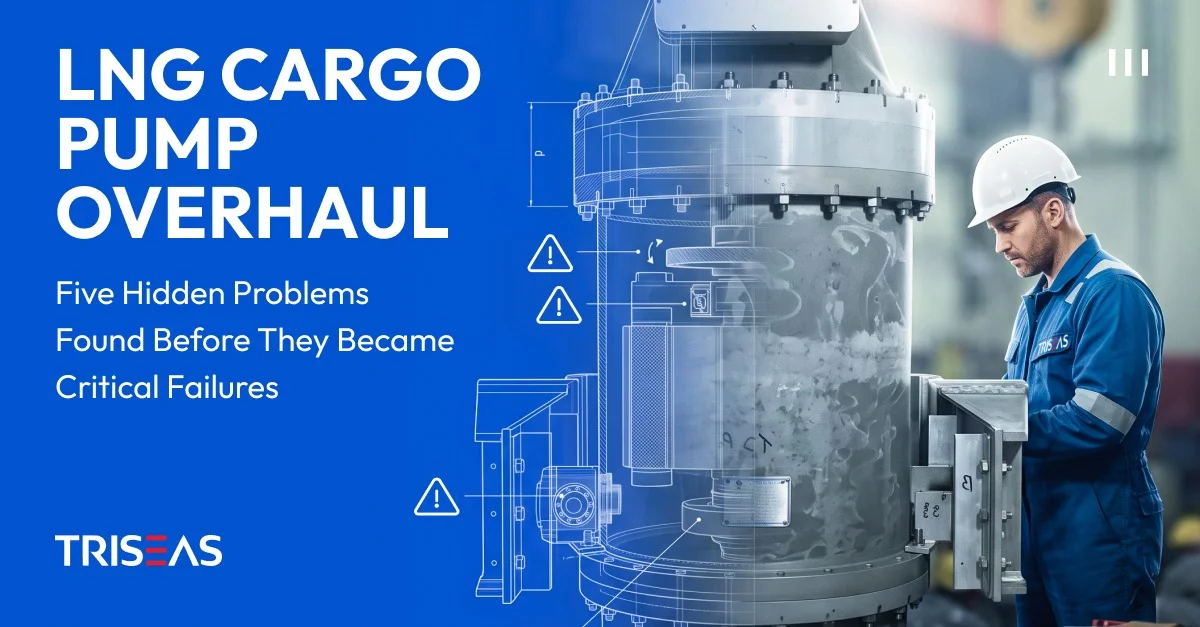
The Pumps Were Running Normally… Until We Opened Them
A recent scheduled LNG cargo pump overhaul on a large LNG carrier reminded us why preventive maintenance is about far more than replacing worn parts.
Before the overhaul, there were no reports of abnormal vibration, reduced performance, or operational issues. The pumps had continued to perform as expected.
However, once the cargo pumps and spray pumps were dismantled and inspected, several hidden issues were uncovered, none of which had yet caused a failure, but all had the potential to become future reliability problems if left unaddressed.
These are five lessons every Technical Superintendent, Chief Engineer, and Reliability Engineer should keep in mind.
1. A Rotor Can Look Perfect, But Still Be Out of Balance
Several LNG cargo pump rotors appeared to be in excellent condition. There were no visible cracks, excessive wear, or obvious mechanical damage.
However, precision dynamic balancing revealed that some rotors had drifted outside acceptable balance tolerances after thousands of operating hours. The imbalance was impossible to detect through visual inspection alone.
This reinforces an important point: appearance does not always reflect condition.
Lesson: Dynamic balancing should be a standard part of every major cryogenic pump overhaul, even when the rotor appears to be in good condition.
2. Low Insulation Resistance Doesn’t Always Mean a Motor Rewind
One spray pump initially failed the insulation resistance test, suggesting a possible motor problem.
Rather than immediately recommending a stator rewind, the motor was dried under controlled low-temperature conditions (approximately 60°C for four hours). After drying, insulation resistance recovered to greater than 10 GΩ at 500 V, allowing the motor to be safely returned to service.
Moisture ingress is not uncommon in submerged cryogenic motors, particularly after storage or extended shutdown periods.
Lesson: Verify whether moisture is the root cause before committing to expensive motor repairs.
3. An Onboard Spare Is Only Valuable If It’s Complete
During inspection of an onboard spare pump, the team discovered that the impeller had been removed during a previous repair and had never been reinstalled.
Fortunately, an identical spare impeller from another compatible installation was available, preventing project delays.
Had that spare not been available, the vessel’s contingency plan would have looked very different.
Lesson: Regularly audit spare equipment to verify that every assembly is complete, correctly identified, and genuinely ready for installation.
4. Bearings Deserve Careful Evaluation During Every Overhaul
Whenever a submerged cryogenic pump is removed for overhaul and handled horizontally, bearing condition deserves particular attention.
Depending on the bearing design, service history, and OEM recommendations, changes in loading during handling may affect bearing condition, even when operating hours are relatively low.
Replacing bearings during a scheduled overhaul is often a small investment compared with the cost and disruption of an unscheduled pump removal.
Lesson: Evaluate bearings carefully during every overhaul and replace them where inspection results or manufacturer recommendations indicate.
5. Small Debris Often Indicates a Bigger Problem
During dismantling, technicians found fragments of gasket material and other foreign particles inside several pumps.
Although no significant damage had occurred, contamination inside a cryogenic pump should never be dismissed as normal. It often points to deteriorating sealing components, previous maintenance practices, or cleanliness issues elsewhere in the system.
Removing the debris addresses the symptom, but understanding how it entered the pump helps prevent it from happening again.
Lesson: Every overhaul is an opportunity to identify and eliminate the root cause, not simply replace damaged parts.
The Real Value of a Scheduled LNG Pump Overhaul
Overall, the pumps on this project were in good mechanical condition. The hidden issues discovered, rotor imbalance, moisture contamination, an incomplete spare assembly, bearing concerns, and internal contamination, were all identified and corrected before they affected vessel operations.
That is the real value of a scheduled LNG cargo pump overhaul.
It isn’t just about replacing components.
What Is the Most Unexpected Issue You’ve Discovered During an LNG Pump Overhaul?
We’d be interested to hear your experience.
